Fryer-Night Face-Off: Manuka Honey vs. Hot Honey on Chicken, Pizza, and Biscuits
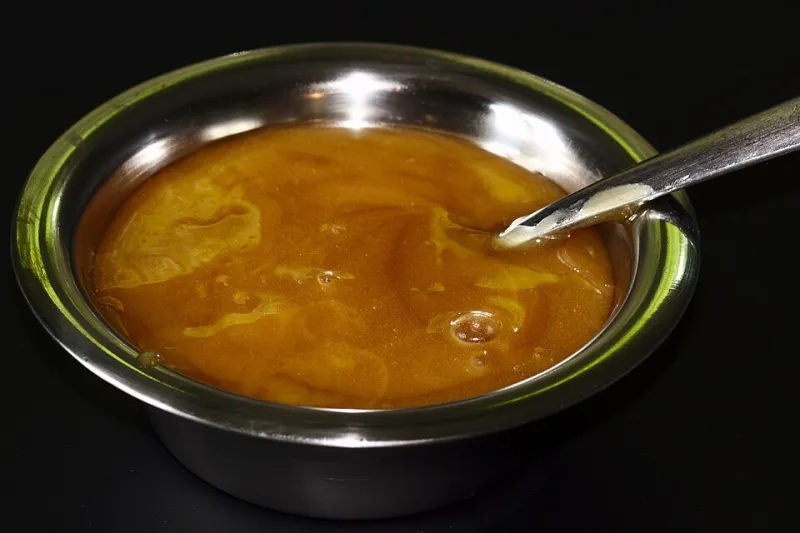
Photo: Sage Ross, CC BY-SA 3.0, via Wikimedia Commons
Hot honey has become the default drizzle in a lot of American kitchens. It’s cheap, shelf-stable, and built for pizza crusts and fried chicken. Manuka honey is the opposite: expensive, nuanced, and usually eaten by the spoon. So what happens when you put them on the same plate? We ran a practical kitchen showdown — no lab coats, just a fryer, a sheet pan, and two jars — to find out where each one earns its keep.
The Setup: One Jar, One Squeeze, Five Plates
We used a mid-range manuka with a UMF 10+ / MGO 263 label and a widely available national-brand hot honey. The manuka ran about $30 for an 8.8-ounce jar; the hot honey was $8 for a 12-ounce squeeze bottle. We tasted both plain on a spoon, then on fried chicken tenders, pepperoni pizza, roasted carrots, and buttermilk biscuits. Scoring was simple: flavor, versatility, cost per serving, and whether the honey’s character held up next to chili heat.
Plain on a Spoon: Complexity vs. Kick
Manuka is not a generic sweetener. The first spoonful is earthy and slightly medicinal, with a floral edge and a long, almost tea-like finish. It’s the kind of honey that makes you pause. Hot honey is more immediate: sweet up front, then a warm chili tingle that builds. Plain, manuka wins for nuance. Hot honey wins if you want a jolt. They’re not really competing for the same spoon.
Fried Chicken: Where Heat Changes the Conversation
Hot honey was basically invented for fried chicken. The sweet-heat combo cuts through salty breading and makes tenders taste brighter. Manuka on fried chicken is pleasant — honey butter vibes — but the chili in hot honey does more work. When we drizzled manuka next to a spicy coating, its earthy notes got buried. If you’re eating plain fried chicken and want a luxury gloss, manuka is lovely. For a crowd-pleasing fryer night, hot honey takes it.
Pizza: The Pepperoni Test
On a hot pepperoni slice, hot honey is a classic for a reason. The sugar balances the salt and the chili wakes up the cheese. Manuka on pizza works, but it can feel a little precious — you notice the floral note for a second, then it fades under tomato and cured meat. It’s better on a white pizza with prosciutto or a salty cheese where the honey is the star. Hot honey wins the everyday pizza test; manuka wins the niche one.
Roasted Carrots: The Surprise Category
This is where manuka closes the gap. Carrots have their own earthy sweetness, and manuka’s medicinal-floral edge mirrors that. A thin drizzle after roasting added depth without turning the pan into dessert. Hot honey was also good — sweet, spicy, a little louder — but it flattened the carrots’ natural flavor. If you’re serving a vegetable side and want people to ask what’s on it, manuka is the more interesting choice. Hot honey is the safer crowd-pleaser.
Biscuits: The Southern-Style Tiebreaker
Hot honey butter on a warm biscuit is a modern Southern staple. The heat keeps the sweetness in check, and the squeeze bottle makes it easy. Manuka butter is richer and more floral, but on a biscuit it can read as just “fancy honey.” We liked it, but we didn’t fight over the last one. Hot honey wins biscuits on both flavor and cost.
Cost Per Serving: The Math That Stings
Hot honey is roughly 11 cents per teaspoon at $8 for 12 ounces. Manuka at $30 for 8.8 ounces is closer to 60 cents per teaspoon — five times the cost. A generous drizzle on fried chicken can easily use two teaspoons, so you’re adding more than a dollar of honey to a plate. That doesn’t make manuka a bad buy; it makes it a different buy. Hot honey is an everyday condiment. Manuka is an ingredient you use when honey is the point.
When the Splurge Makes Sense
Buy manuka when you’re eating it plain, pairing it with mild cheeses, stirring it into tea, or using it in a recipe where honey is the headline — a glaze for salmon, a finish for roasted carrots, a spoon over yogurt. Its complexity survives mild heat and dairy. It does not survive a cayenne-heavy hot honey comparison, and that’s fine. Buy hot honey when you want heat, convenience, and a drizzle that works on pizza, fried chicken, biscuits, and cornbread without a second thought.
The Verdict: Two Jars, Two Jobs
If you already love hot honey, don’t replace it with manuka. They solve different problems. Hot honey is the $8 squeeze that makes a weeknight plate pop. Manuka is the $30 jar you reach for when you want to taste something quiet and layered. The smart move is to keep both: hot honey for the fryer, manuka for the spoon. That’s not a compromise — it’s just good pantry math.